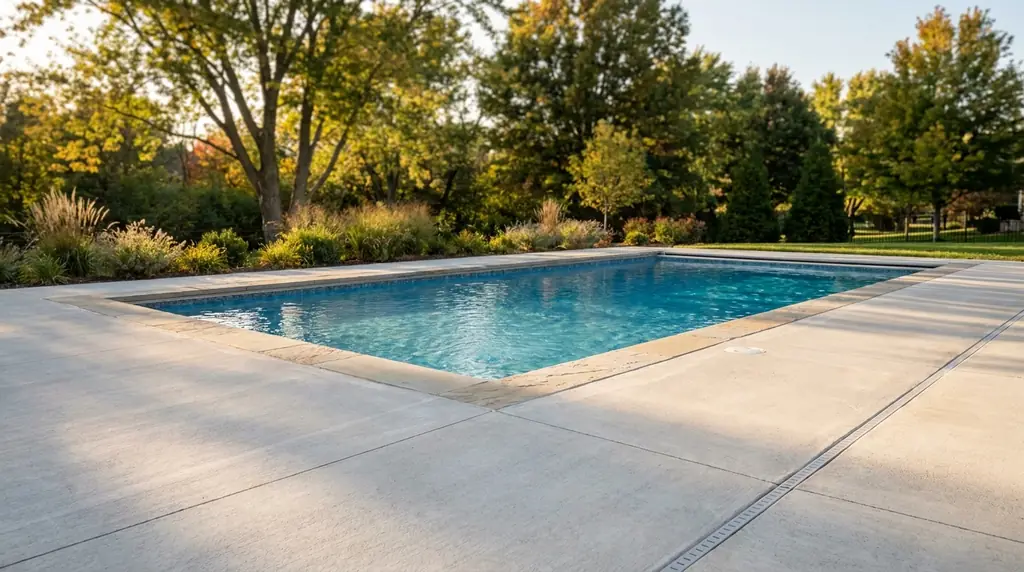
The Technical Part: The Expansion Joint
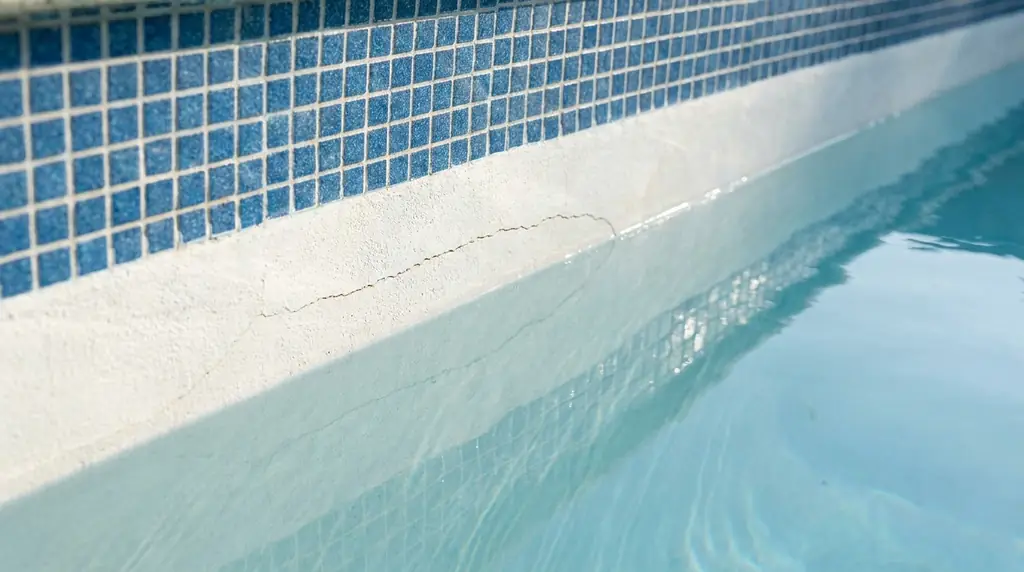
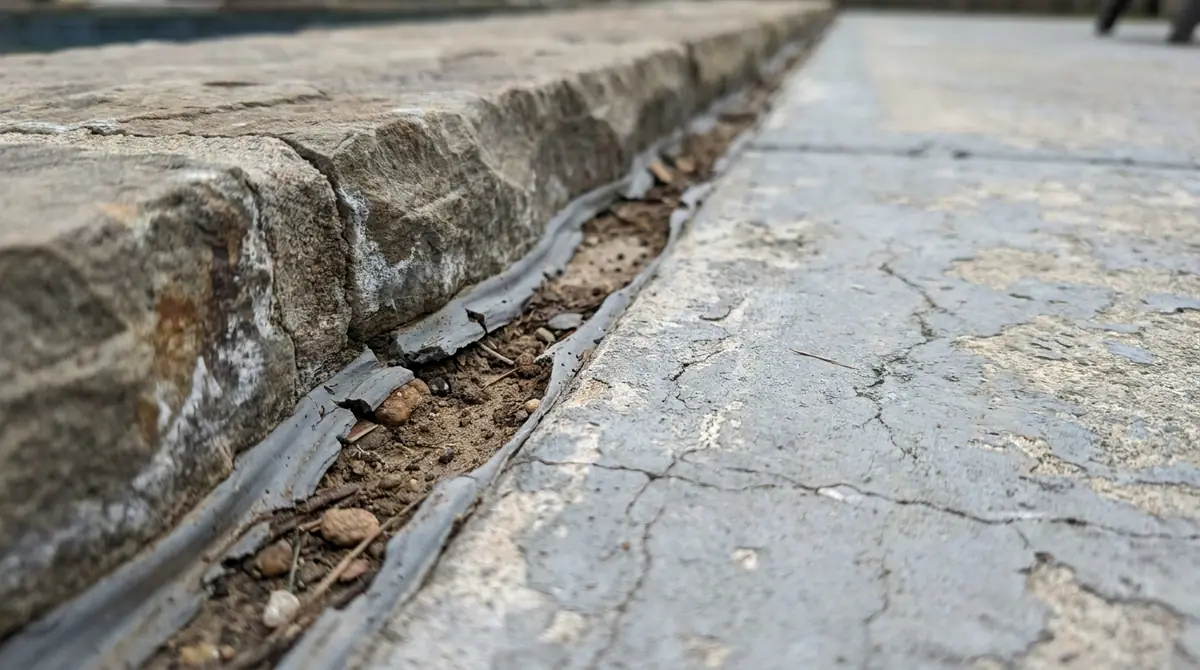
A gap sits between your pool coping and your deck, and it is supposed to be there. It is called an expansion joint, and it is packed with foam backer rod and a flexible sealant. The reason it exists is that the environment moves the coping and the deck differently.
Your pool shell is set in compacted soil and it basically stays put. Your deck sits on a gravel base over whatever dirt was already in your yard, and it moves constantly. Something has to give between the two, and the joint is what gives.
When the sealant in that joint dries out and fails, water gets into the gap and down into the soil under the slab. Kansas City winters take it from there. Water freezes, expands, thaws, refreezes, and the gap gets a little wider every round. That sealant has maybe five to ten years in it before it needs redoing, and when we go inspect a failed pool deck, that joint is usually where the trouble started.
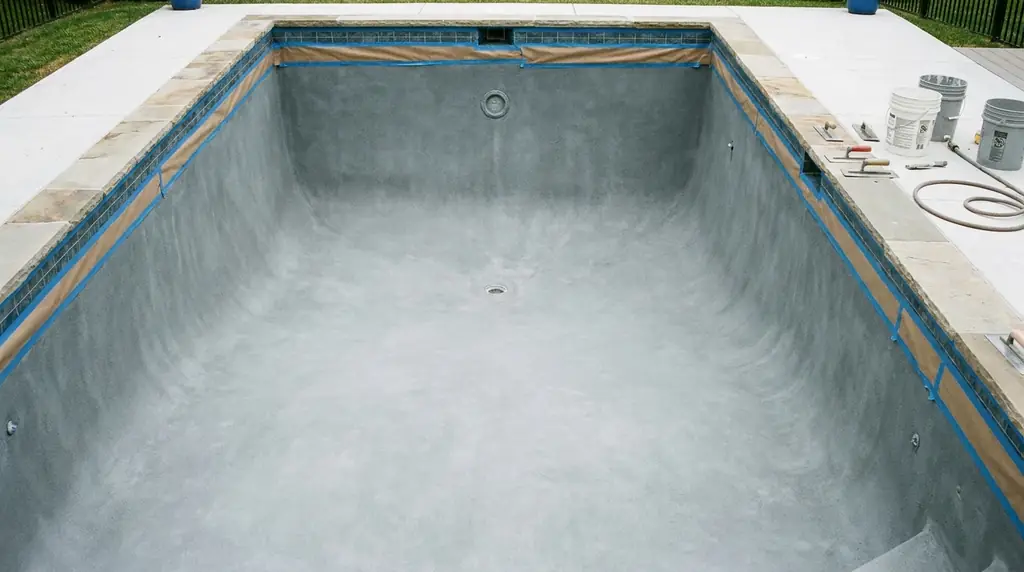
So here is the argument. Renovate both at once and that joint gets cut, packed, and sealed as one piece of work, with new material on either side of it. Renovate the deck five years after the pool and you are pouring fresh concrete against coping that already has five more winters on it. Our pool deck and patio renovation work almost always goes better when the shell and the slab are handled as one system rather than two appointments.
The Money Part: Paying to Open the Same Ground Twice
Every renovation carries costs that have nothing to do with materials. Crews mobilize. Equipment comes in. The same stretch of ground gets opened, worked, and closed. Your backyard is a job site instead of a backyard.
Split the projects and you pay for all of that twice. The setup, the hassle, the disrupted peace, and the transportation of equipment all find their way into your bank account one extra time.
There is also a timing piece, and it is the reason we are publishing this in the fall. Around here, this work wants to happen before the ground freezes, and the sealed joint we just spent three paragraphs on is what carries your deck through winter. Wait until spring and you are calling everybody at once, in the same week as every other homeowner who looked at their deck in March and did not like what they saw. Book it now and you are swimming when it gets warm instead of watching a crew work.
If your deck is already cracking at the edge, one more winter is not a neutral decision. That gap gets bigger every freeze.
The Plumbing Part: What Is Sitting Under the Slab
We had a customer refinish her pool one year. She loved it. She came back the next year and tore the entire deck out.
Both jobs turned out great. But when that deck came up, her plumbing was sitting right there, so we replaced it while the trench was open. She got the backyard she wanted. It just took two seasons, two tear-ups, and two rounds of paying for it.
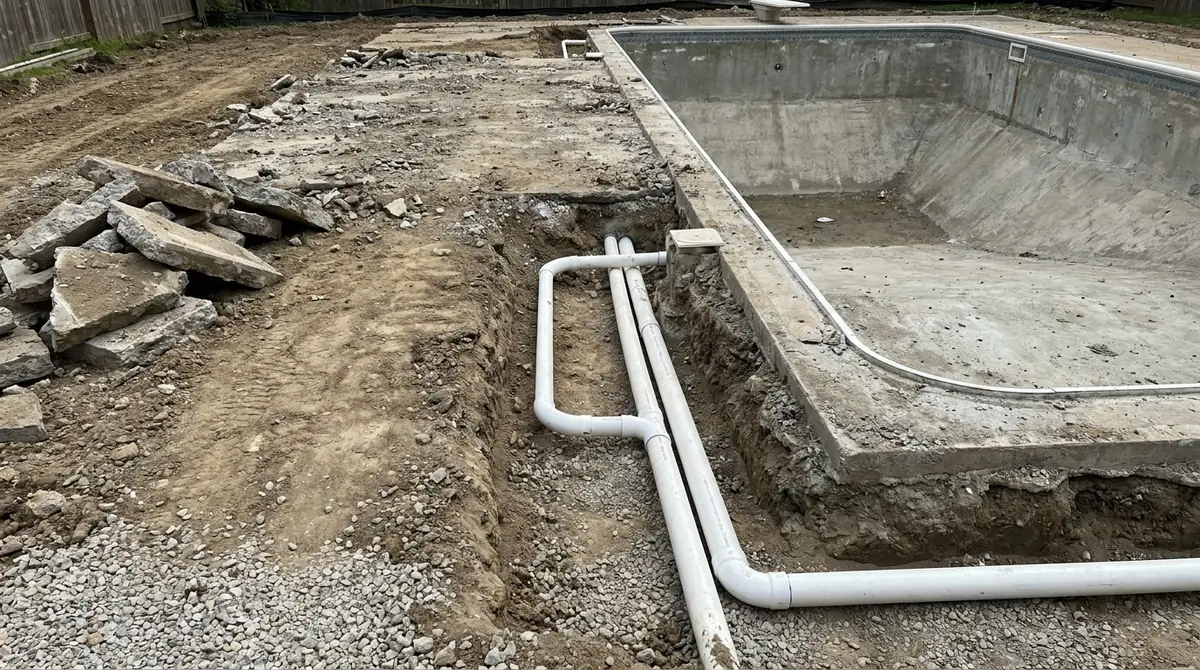
Here is what is actually down there. Your return line usually makes a full circle around the pool, under the deck. The main run out to the equipment pad sits in a trench eighteen inches down or deeper. Skimmer lines are in there too. With the deck out, all of it is exposed and it is ours to work with.
After the new deck is poured, none of it is. Getting to a leaking pipe under a slab means cutting concrete, digging, fixing, backfilling, and patching. You are not just paying for the repair, you are paying to undo and redo the deck you just bought. If you are already seeing water loss you cannot explain, read what a cracked or leaking pool actually takes to fix before you pour anything on top of it.
The pipe does not care that you just spent money on the deck. If it is thirty years old, it is thirty years old.