Cracked or Leaking Pool? It Can Probably Be Saved

Chris Oswalt

President of Probuilt Renovations

8 min read
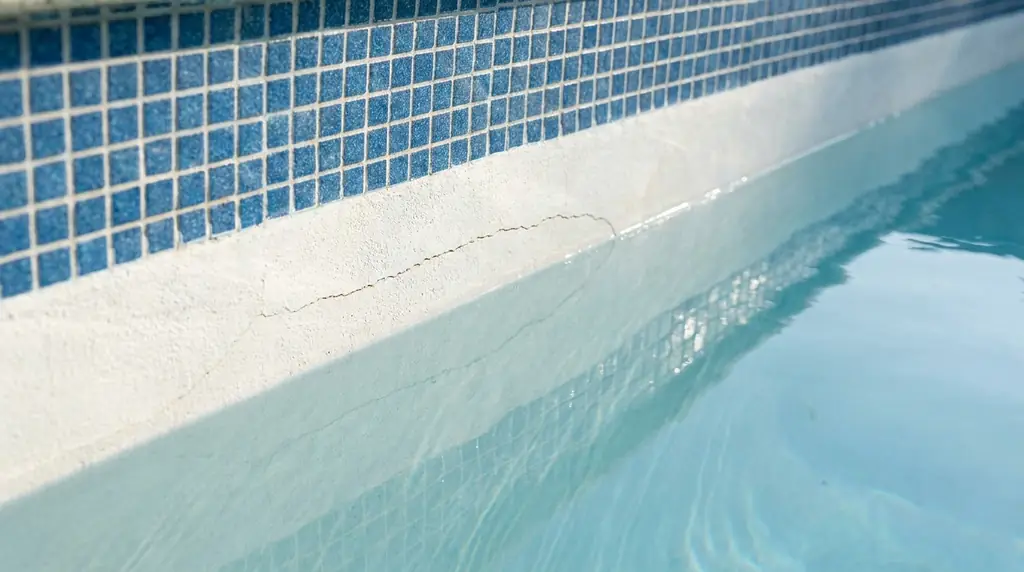
A hairline crack running along the waterline tile of an inground pool, the kind of damage that is usually repairable rather than terminal.

The moment a pool starts losing water, or a crack shows up along the tile, most people jump straight to the worst case number: a whole new pool. Take a deep breath, because that is almost never where this ends up. Leaking or cracked pools are, contrary to popular belief, not unsalvageable. It can be quite simple to fix once the source of the water loss is identified. Visual inspection, dye testing around the fittings, and pressure tests on the plumbing are all standard procedure. Whether it is worth fixing usually comes down to the crack itself.

A hairline or cosmetic crack is routine. A structural crack wider than about half an inch needs a closer look, but modern staple and filler repairs hold up well, as long as the ground underneath settles down.

So before you start pricing out a teardown, let me walk you through how we figure out what is really going on, and how we decide whether your pool is worth saving. Usually it is.

First, Make Sure It Is Actually a Leak

Every pool loses some water, especially during a hot, dry, windy Kansas City stretch, so step one is making sure you are leaking and not just watching evaporation and splash-out. If you want to check before calling anyone, our bucket test guide walks you through it in about a day.

The quick gut check: are you losing noticeably more than usual, after you account for how many people have been swimming, how hot it has been, and normal splash-out? If yes, it is time to find the source.

How We Find a Hidden Leak

Finding a leak is detective work, and every pool is different, so it can take one visit or a few. Here is the order we work through.
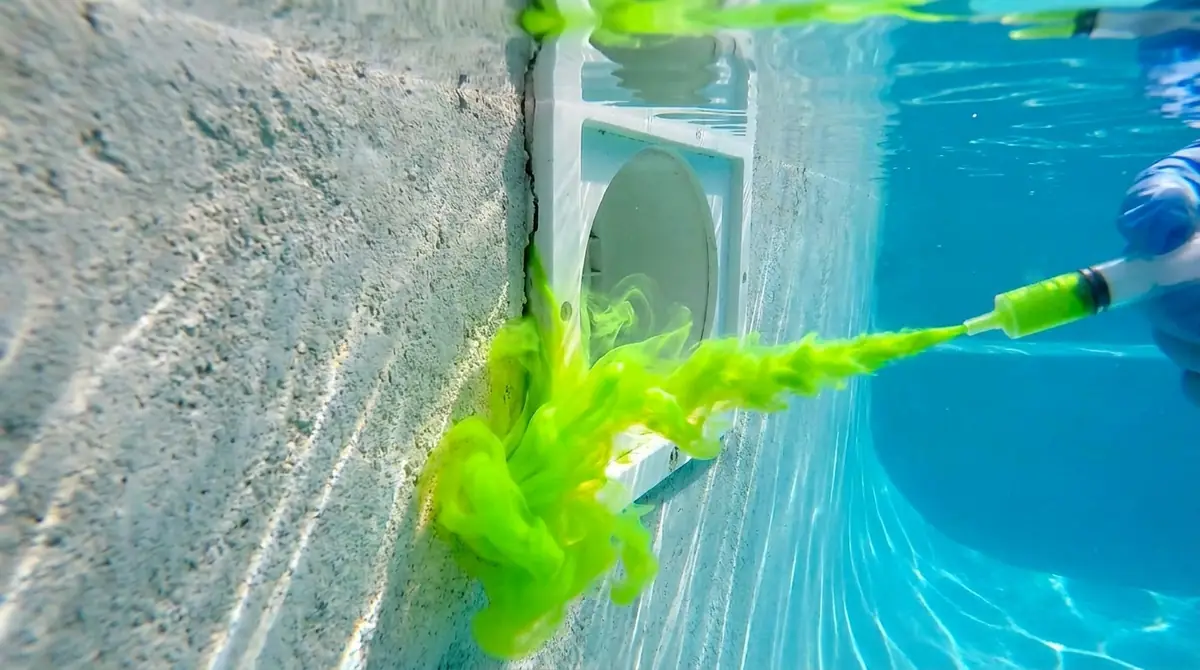
Colored dye being released underwater next to a pool skimmer opening to reveal whether water is being drawn out through a gap.
A dye test around the skimmers, returns, and lights is usually the fastest win. If there is a gap, the dye gets pulled straight into it while the pool stays full.
  • Look first. We check the equipment pad for anything wet or leaking and scan the yard for soggy or unusually wet patches, which can mean water is escaping underground.
  • Dye test the fittings. Usually the fastest win. We release dye near the skimmers, returns, and lights and watch whether it gets pulled into a gap.
  • Let the pool find its level. If the dye test comes up empty, we often have you let the water drop until it stops. Where it settles tells us a lot.
  • Pressure test or sonar. From there we can pressure test the plumbing or run sonar to pinpoint it. Some leaks turn up in ten minutes. Some take real patience.

Some leaks are stubborn. Anyone who promises to find every leak instantly has not chased enough of them. If you want the fuller picture of what the process looks like on site, our leak detection and crack repair page covers it from the first visit through the repair.

When a Repair Beats a Replacement

Read this before you decide to get a replacement quote. People call us certain their pool is done for, ready to tear it out and start over. Then we come look, and it is fixable.

One owner was holding a quote to replace the whole thing. We repaired it and refinished with ecoFINISH instead, and it saved them somewhere around seventy thousand dollars on that one job. Their read was that the pool was shot. Ours, once we were standing in it, was that it needed the right repair and a new surface.

The mistake to avoid is the opposite one: letting a fixable pool sit and deteriorate, year after year, until it really is too far gone. There is a point where you stop kicking a dead horse, but most pools are nowhere near it yet.

Where People Waste Money First

The most common money pit we see is pool paint. It looks like a cheap fix, so people grab it. Then it flakes in a couple of years, and now you are paying to strip it off before anything can be done right. You paid to put it on and you are paying to take it off. If your surface is failing, going straight to a real, long lasting finish almost always beats buying two years with a bucket of paint.

What Kansas City Winters Do to a Crack

Here is why a small crack in this climate is on a clock. A crack is an opening, and an opening lets water get down into the shell where it does not belong. That water freezes, and freezing water pushes outward hard enough to widen the space it is sitting in. Then it thaws, a little more water works its way in, and the next cold snap does it again. Every swing makes the opening slightly bigger than the last one.

Which is why the calendar matters. A crack you find in October and deal with in October is a small repair. The same crack in April has had all winter to work on itself. If you are looking at one right now, this is the wrong season to wait and see.
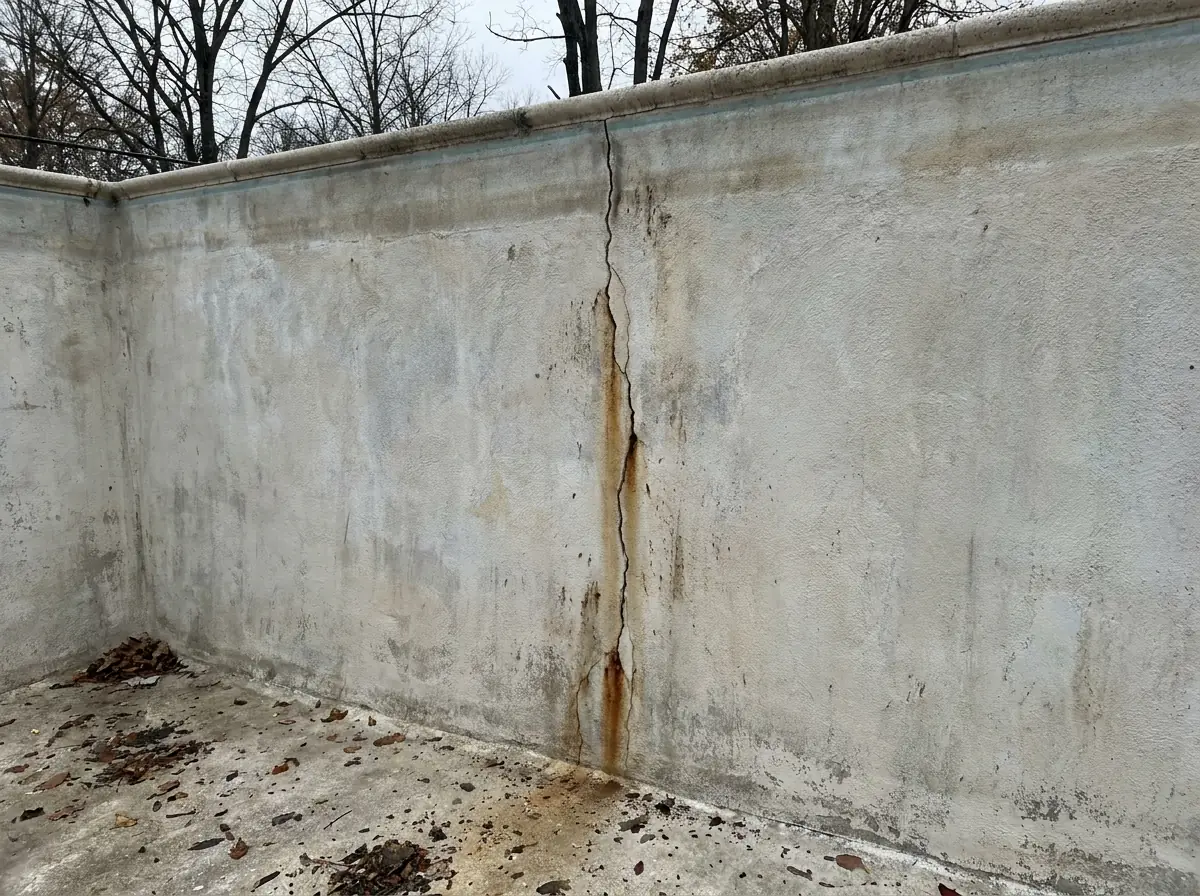
A structural crack in the plaster wall of a drained gunite pool, photographed in cold weather before a repair.
Staining along the length of a crack is a tell that water has been moving through it for a while, not just sitting on the surface.

The One We Could Not Out-Fix

Not every story ends with a save. The toughest leak we ever chased was on a vinyl liner, and we could not find it. It was almost certainly hiding in a welded seam, which is one of the ways liners fail. Rather than keep the owner bleeding money on the hunt, we drained it and replaced the liner, and that solved it. The leak got fixed, even when finding it was not in the cards.
Key Takeaways

The short version

  • Most leaking or cracked pools can be saved. Step one is finding the leak, not assuming the worst.
  • We find leaks with a visual inspection, a dye test around the fittings, letting the pool find its level, and then a pressure test or sonar if needed.
  • Crack width is the first tell. Cosmetic cracks are routine. Cracks over about half an inch need a closer look, but staple and filler repairs hold well unless the ground keeps moving.
  • A repair often beats a replacement. The real mistake is letting a fixable pool rot for years.
  • Skip pool paint. It flakes fast and you pay again to remove it.
  • A crack found in fall is a small repair. The same crack in spring has had all winter to grow.

Frequently Asked Questions

Common questions answered

Do you have to drain my pool to find the leak?

Usually not. A dye test happens with the pool full, and most of what we find, we find that way. Sometimes we will ask you to let the water drop to its natural level, which is not draining so much as letting it tell us where the hole is. Full drains are a last resort, and on a vinyl liner they usually mean we have already decided the liner is the fix.

Can I just keep topping off a leaking pool and deal with it later?

You can, and plenty of people do. What it costs you is the water bill, the chemicals you are buying to treat water that is leaving, and whatever that water is doing to the ground around your pool on its way out. Add a Kansas City winter to it and later gets more expensive than now.

Can a cracked pool be repaired, or does it have to be replaced?

Almost always repaired. A hairline or cosmetic crack is routine work. A structural crack wider than about half an inch needs a closer look, but modern staple and filler repairs hold up well as long as the ground underneath has settled down. We have repaired and refinished pools that the owner had already priced out as a full replacement.

How long does it take to find a pool leak?

It depends entirely on where the water is going. Some leaks turn up in ten minutes on the first dye test. Some take a few visits of visual inspection, level testing, pressure testing, and sonar before they give themselves up. Every pool is different, and anyone who promises to find every leak instantly has not chased enough of them.

Is pool paint a cheap way to fix a failing surface?

It looks like one, and that is the trap. Pool paint usually only buys a couple of years before it starts flaking, and then you are paying again to strip it off before a real finish can go on. You pay to put it on and you pay to take it off. If the surface is failing, going straight to a long lasting finish is almost always the cheaper road.

Think your pool might be leaking? Let us find it before it grows.

Tell us what you are seeing and we will take a look, no pressure. We find the leak, repair the crack, and resurface or replace the liner if that turns out to be the real issue, all from one local team.

We are based in Riverside, MO. Most leak calls start with a quick conversation at (816) 786-3893.