Why the Finish Is the Easy Part
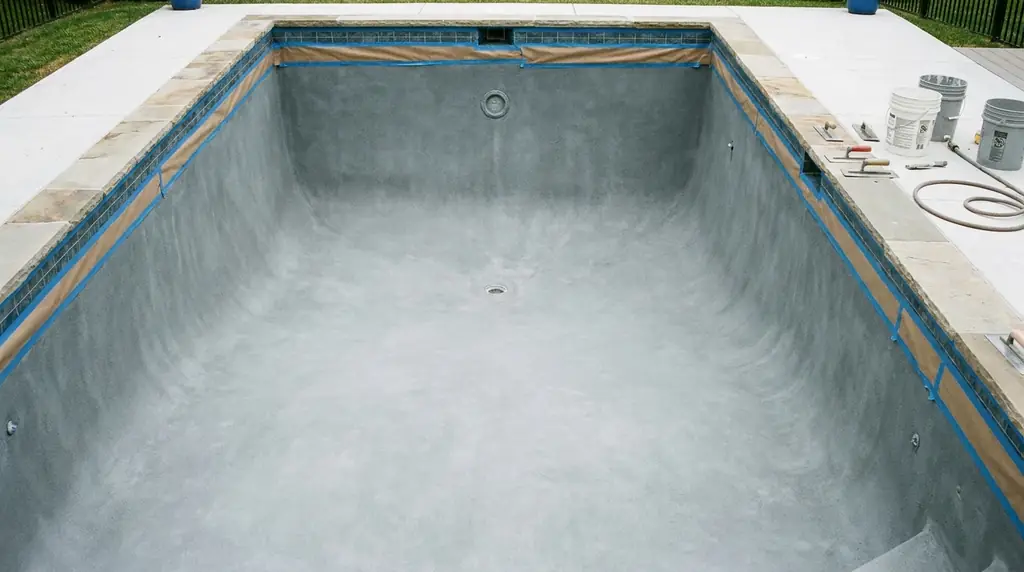
Once a pool is properly prepped, the finish goes on clean and quick. It is the least labor intensive step of the whole job. Most of the hard work happens before it gets sprayed.
That is a big part of why prep is where corners get cut. If a company lowballed the bid to win it, they have to make that money back somewhere, and prep is the easiest place to quietly trim, because you cannot see it once the water goes in. The finish can look great on day one either way. The difference shows up a year or so later, and by then the crew is often long gone.
What Happens During Prep Week
Every pool is a little different, but here is the general sequence, so you have a sense of what a careful job looks like.
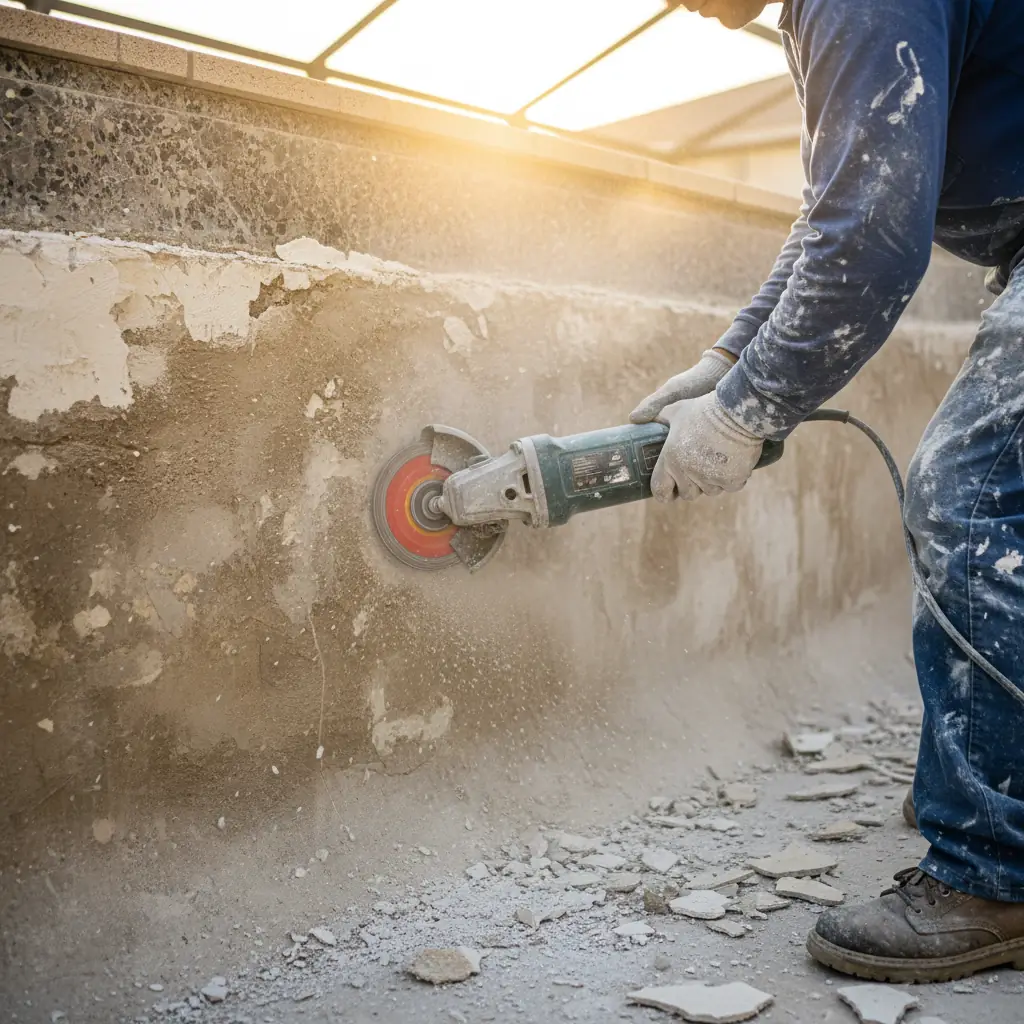
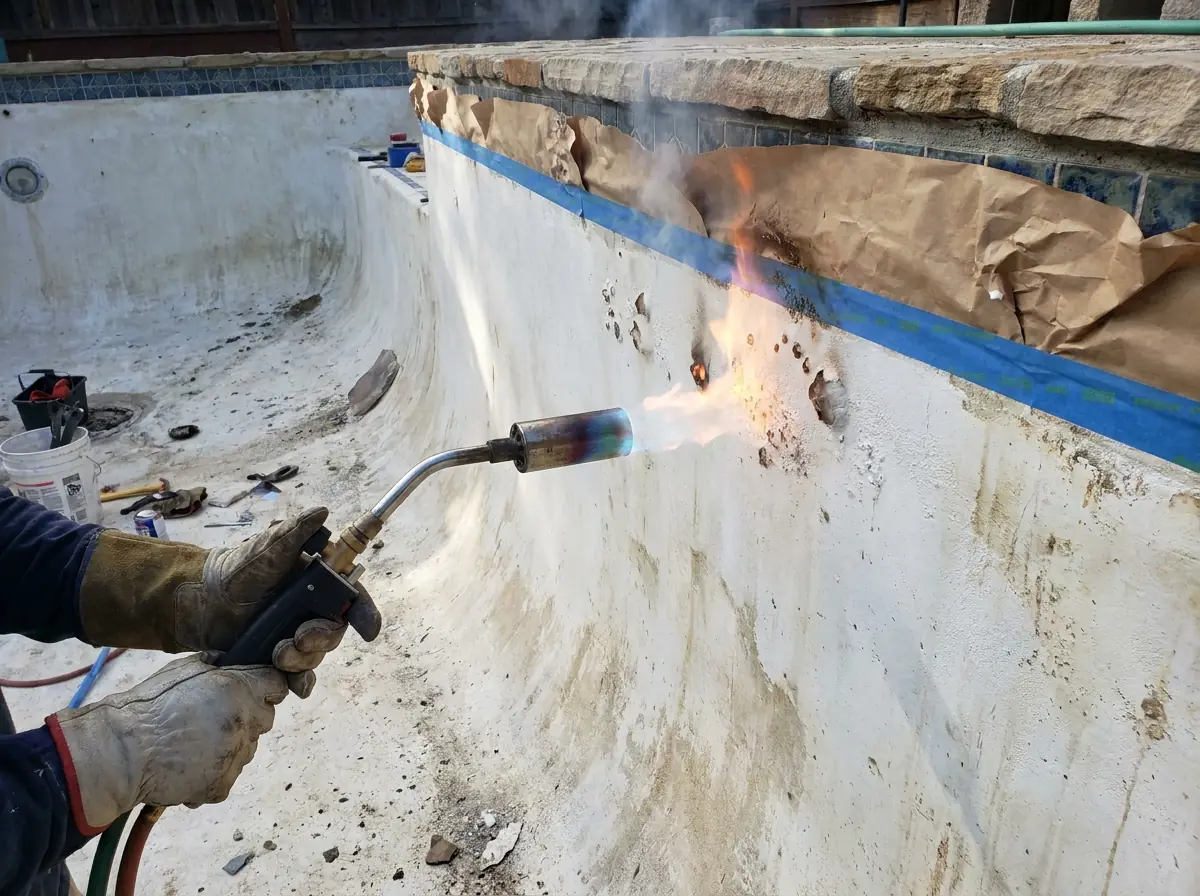
It usually starts with heat, on both gunite and fiberglass. We tape off the tile, coping, and fixtures, then run heat across the surface and watch for pop-outs, which are little defects that would chip off later. It is much better to catch those now, with the pool empty, than under a fresh finish.
From there, the two pool types go a little differently. On fiberglass we fix any cracks and imperfections, wipe the whole pool down with acetone, and lay an epoxy base coat. Once that sets, the finish can go on.
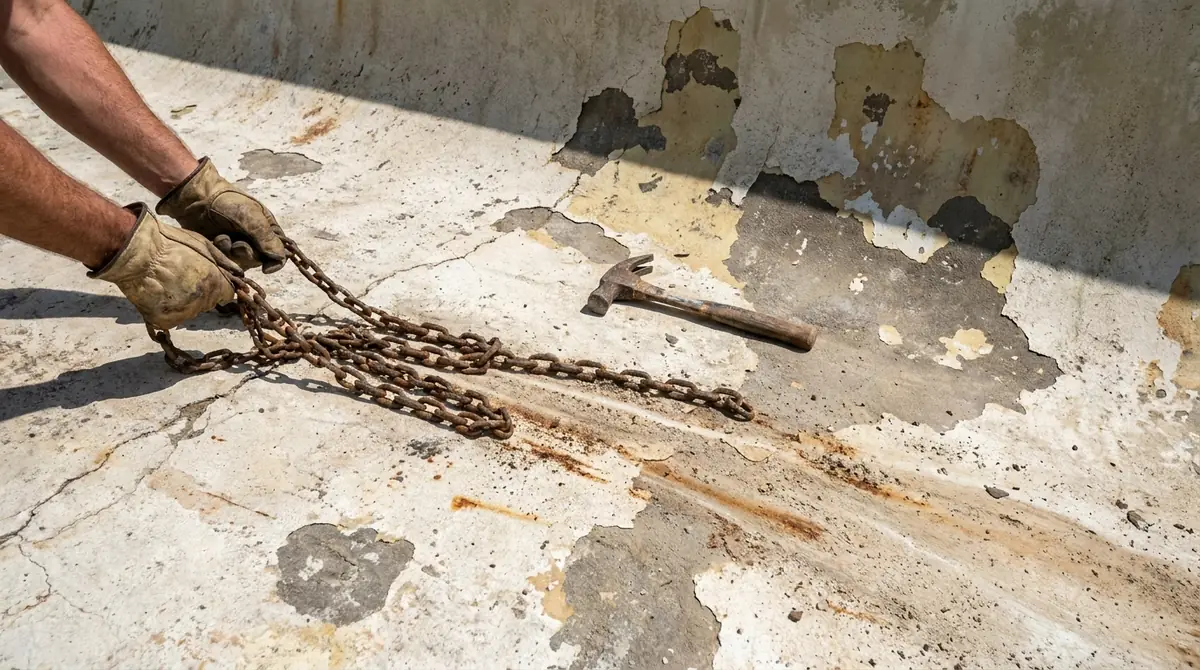
On gunite we drag a heavy tow chain across the surface and tap around with a hammer, listening as we go. Solid shell rings solid. A hollow spot usually means the plaster has separated underneath. Those spots get demoed and re-plastered before we go any further. Then we acid etch the whole pool to rough it up so the base coat can grip, and lay two coats of base before the finish. That is the full sequence behind our gunite and fiberglass pool refinishing work.
How to Tell Your Crew Is Doing It Right
You do not need to know a thing about pool chemistry to spot a rushed job. You mostly need to know that the prep above should be happening at all.
If you have ever thrown pottery, you know that clay needs scoring, a roughening of the surface, to help it attach to more clay. This is similar. A smooth finish on smooth ground has less ability to adhere. If the surface is not being cleaned, checked, and roughed up first, the finish does not have much solid to bond to, and that is usually where problems start.
If you want the longer list of questions to put to each bidder, along with what a real warranty covers, our guide to vetting a pool coatings contractor goes through it one question at a time.
A Real One: The Pool That Got Hosed Off and Coated
A local apartment complex called us this summer. They had gone with a cheaper bid, and by the middle of the season their pool still was not open. The property manager reached out with concerns, so we went to take a look.
The tile looked fine. The trouble was underneath. The previous crew had not removed the old paint, had not blasted the surface, had not really prepped much of anything. They hosed it out, laid a scratch coat straight over it, and plastered on top. It might hold for a while. It could also start peeling within a year, because there was not much done to help it bond. Now we are coming in to do it the right way, and they are paying for the job twice. That is a big part of why this post exists.
The Surprise That Can Grow the Job
If one thing tends to grow a project once we are into it, it is hollow spots. When we sound out a gunite shell and find areas where the plaster has pulled away, we usually have to remove more than anyone would like and re-plaster before finishing. Nobody enjoys demoing extra. But leaving a hollow spot under a new finish is a pretty reliable way to end up right back where you started.
What Kansas City Weather Does to the Schedule
Coatings care about temperature, which means around here the calendar does a lot of the deciding for you. We want the pool walls and the air at a minimum of 50 degrees, ideally somewhere in the 60 to 80 range, and rarely over about 90. Too cold and the material will not cure the way it is supposed to. Too hot and it sets faster than anyone wants to work.
That window is not open all year in Kansas City, and everybody wants the same weeks. Depending on the season, we are typically booking three to six weeks out. So if the window matters to you, the time to start the conversation is before it closes, not the week you want the crew in your backyard.